Under Development
This course is still under development. The outline below suggests the content that may appear on this page at a future date.
Development Outline For This Course
Nail Care Practices
Hand Care Practices
FIST THEORY
A R T A N D S C I E N C E O F F I S T I N G

Skin and Nail Care
Considerations for Hand Maintenance
Education Center | Course 050403007
Author: Finn Vortex
Published: DD Month YYYY
Updated: DD Month YYYY
Duration: NN Minutes
Section 1 | Section 2 | Section 3
Lorem ipsum dolor sit amet, consectetur adipiscing elit, sed do eiusmod tempor incididunt ut labore et dolore magna aliqua. Ut enim ad minim veniam, quis nostrud exercitation ullamco laboris nisi ut aliquip ex ea commodo consequat. Duis aute irure dolor in reprehenderit in voluptate velit esse cillum dolore eu fugiat nulla pariatur. Excepteur sint occaecat cupidatat non proident, sunt in culpa qui officia deserunt mollit anim id est laborum.
This course is still under development. The outline below suggests the content that may appear on this page at a future date.
Nail Care Practices
Hand Care Practices
In this section: Exposure and Transmission | Myths and Misconceptions | Techniques | Group and Venue Considerations
There are four reasons why fisters should practice improved hygeine compared to traditional sex:
These misconceptions and myths exist regarding the anal canal and fisting:

Water Temps
Duration
Soap
Drying
Nails
Category: Water Temperature
"Warm to hot water is needed for full disinfection."
Water temperature is irrelevant to disinfection. Soap and technique play the greatest role germ removal.
Extremely hot water can weaken bonds in PEO-based lubricants, but near-scalding temperatures are needed to notice any result.
Category: Duration
"Thirty-seconds to wash is plenty."
Healthcare facilities recommend staff wash for 30 seconds (about the length of the ABC song) to prevent the spread of germs. For initial penetration in one-on-one sessions, this is sufficient.
In group play, the length of time to wash between partners may triple or quadruple based on the type of lube used. Lipid- and PEO-based lubes will take the longest time.
Category: Soap
"Dish soap is the best choice for cleaning up all lubes!"
Dish soap is best for petroleum- and lipid-based lubricants such as Vaseline and Crisco, but works poorly on PEO-based lubes, especially when applied after the hand or arm has been wetted.
Dish soap will remove PEO-based lubes with effort when applied before wetting the hand/arm; however, shave foam or hair conditioner remove this type of lube most easily.
"A quick hit will open your hole up!"
Poppers affect smooth muscle, but the external sphincter is skeletal muscle, and not affected. Poppers may cause a change in mental state, which makes popping the first ring easier.
"Poppers are not a drug, and they are harmless."
Poppers are a psychotropic substance and can cause damage, especially if used excessively. See Playing with Poppers.
"Ouch, that's gotta hurt!"
Nope! If done correctly with sufficient lube and stretching, it actually feels pretty good.
"No pain, no gain!"
Gains are acquired gradually and should be pain-free. If one hears a bottom or top recite this mantra, he should disengage immediately.
Drying Hands
I can air dry or use a shared towel.
Damp hands will pick up more microorganisms in transit and by touch than dry hands. Use an air dryer or disposable towels to dry hands.
A shared towel assumes all previous users completely eliminated lube remnants prior to drying off. Use a fresh, dry towel instead of sharing.
"Warm to hot water is needed for full disinfection."
Water temperature is irrelevant. Technique, tools, and soap play the greatest role in sanitation.
Hot water may be slightly more helpful in weakening the bonds in PEO-based lubricants, making handwashing easier; however, tools and technique again play the greatest role.
"How does it (the asshole) take an actual fist?"
Clenched-fist fisting is an extreme form of fisting practiced only by skilled bottoms, typically into punching. Traditional fisting and many forms of punch fisting use the Silent Duck technique as the only form of brachio-anal penetration.
"You will / won't damage your asshole!"
Proper protocols reduce the likelihood of injury. Hundreds of men fist daily without injury or complications, but accidents still occur. Also note that some fisters report hemorrhoids that are brought on or exacerbated by trauma to the veins in the anus.
"Fisting is / isn't dangerous!"
When both partners are experienced, sober, and the play is shallow, injury is not likely to occur. On the other hand, to assume even advanced fisters never damage there hole is foolish. It happens. All fisters should make sure they are comfortable with the risks of fisting.
"A quick hit will open your hole up!"
Poppers affect smooth muscle, but the external sphincter is skeletal muscle, and not affected. Poppers may cause a change in mental state, which makes popping the first ring easier.
"Poppers are not a drug, and they are harmless."
Poppers are a psychotropic substance and can cause damage, especially if used excessively. See Playing with Poppers.
"Ouch, that's gotta hurt!"
Nope! If done correctly with sufficient lube and stretching, it actually feels pretty good.
"No pain, no gain!"
Gains are acquired gradually and should be pain-free. If one hears a bottom or top recite this mantra, he should disengage immediately.
"The second ring just inside the anus."
Due to an incorrect application of anatomy knowledge, some individuals believe that the internal and external sphincter are two separate rings.
In almost all bottoms, a top cannot distinguish the difference between the two sphincters. Together they create the single, first ring.
Oxytocin Effect
Tops may avoid using gloves because it decreases sensory input. Many tops are aroused by the velvet-like texture of the rectum. Some claim that gloves impede their senses when exploring at deeper levels which puts the bottom at risk.
Except for the anal canal, the fist chute has no touch sensation. Pressure sensation in the bones and tissues provides pleasure once the hand is completely enveloped inside the fist chute. The pressure receptors allow bottoms to experience the sensation of drag, which can be uncomfortable.
There are three causes for irritation:
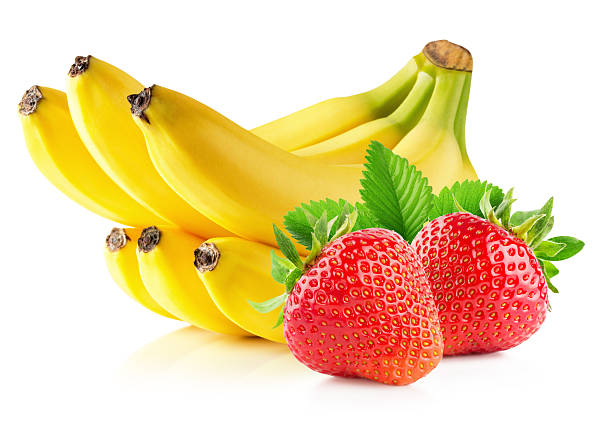
Mouth tingling due to strawberries, bananas, and some other fruits is a good indicator of a latex allergy.
Depth play preferences also determine whether to don or ditch gloves. The argument for ditching is that unless the gloves are opera length, there is direct contact between skin and fist chute tissue, thus making gloves useless. The argument for donning gloves is that once a hand is in the hole, it is not extracted frequently thus decreasing lower hole irritation while providing protection for the upper chute.



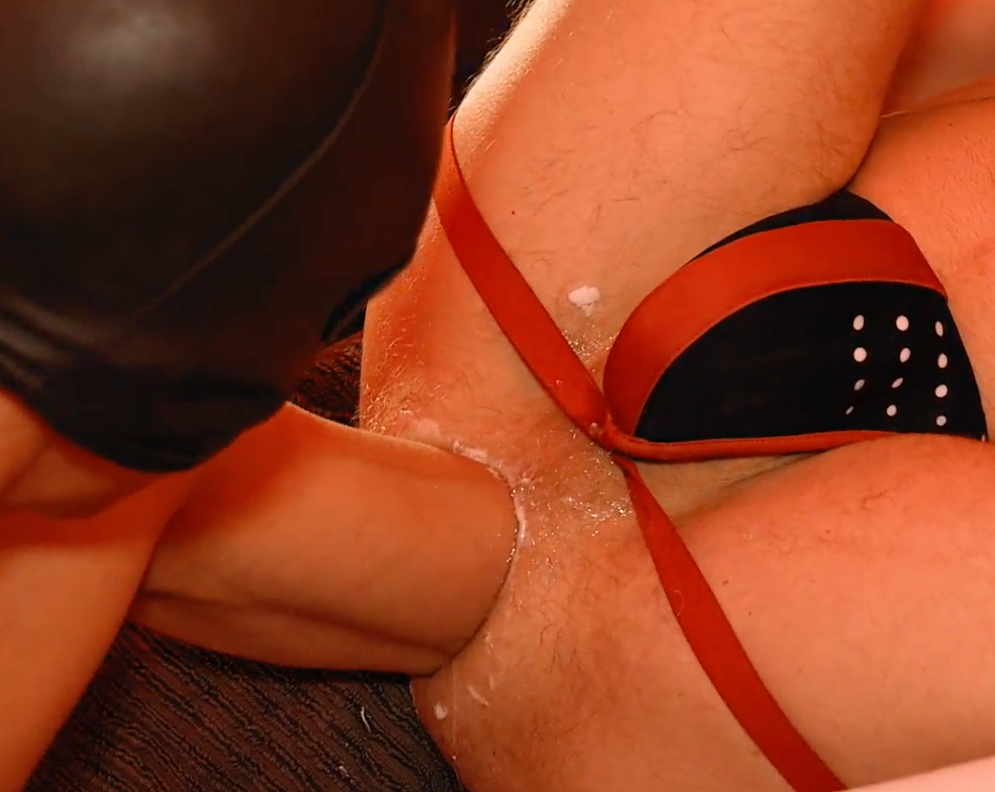
@FFFin5 and @xtremefister demonstrate why gloves may be futile for barrier protection, but still important for personal preference.
In this section: Etiquette | Standard Practices
Protocols include standard practices and etiquette followed by the majority of the fisting community. Typically, these are things that new fisters pick up over time.
Etiquette refers to how you treat others in a specific fisting scenario. There are three etiquette guidelines related to gloves.
Who: Top and Bottom
When: Prior to Session
What: Prerequisites
People typically do not use gloves when playing in a private residence or hotel room with a single partner or small group (less than five people). People may opt for gloves in larger groups, with depth play, or in venues with inadequate washing facilities.
Do not assume your partner follows these practices. Specify—before you meet—your preferences or your present needs that alter your preferences. For example, if you generally play without gloves but have a cut on your hand and need protection, you should inform your partner before scheduling a session.

Informing your partner regarding your play requirements prior to meeting can prevent awkward situations in a fisting session.
Edgar and I have a standing fist session on the first Thursday morning of every month. We've always played S2S, but this month, I had cut my finger and the wound was still healing. I would need to wear gloves.
We averted a crisis because I wasn't planning on cleaning out that day to allow him to be the designated bottom.
— FF Chronicles: 22.08.0400
Who: Requestor
When: Throughout Session
What: Provisions
While BYOG (Bring Your Own Gloves) sounds reasonable, guys that only play S2S may not keep gloves in stock. The Provisions Matrix indicates that the responsibility falls upon the individual who requests gloves. This means a bottom who requires gloves will need to have several pairs of each size on hand, regardless of hosting or travelling for the session.

To ensure correct fit, the supply cabinet or bag should contain XS to XL size gloves.
Peter was a horse-hung-silver-fox-pocket-otter-gym-rat with no hang ups regarding masculinity. I had watched him top eager bottoms in his signature pink gloves for three days at Fist Fest. I knew his small hands would work wonders inside my hole. I approached him at breakfast on the final day of the event.
"Hey! You got any room on your dance card for me today?" I asked.
"Absolutely. I've been eyeing your hole for days" he responded and followed up with "I want to sink my elbow into you!"
"Great! Let's do this. But first, you gotta tell me what's the deal with the pink gloves?"
"I'm married to a non-fister. Obviously, we play separate; however, our agreement is that we wear protection when playing with others. Since most guys don't have XXL condoms or XS gloves, I provide my own." He continued, "I accidentally bought pink gloves several years ago, and it garnered so many comments that I've never bought any other color since."
"So, your condoms are pink, too?" I asked since I hadn't seen him topping with his cock.
"One could only hope that pink condoms would come in King size, but alas, you'll have to settle for transparent."
"So, I get both your hands and dick?"
"Both hands and dick? I'm not sure that's possible, but we can do jack-in-the-box. I've seen your hole, and I'm gonna jack-hammer the fuck out of you!"
We chatted a little more and sat up a play date for the afternoon. It was a great way to finish off the festival: pummeled in pink. The next time I ran out of gloves, I ordered pink replacements in honor of that epic event.
— FF Chronicles: 18.04.0275
Who: Top and Bottom
When: Throughout Session
What: Consent
"It's the bottom's choice" is a common phrase you will hear when discussing glove etiquette. This would be true if gloves were always optional for both parties, but they are not. Sometimes, tops must wear gloves.
Neither party should be forced or harassed to fist in a manner with which they are not comfortable. Bottom's Choice should be replaced by Mutual Consent.
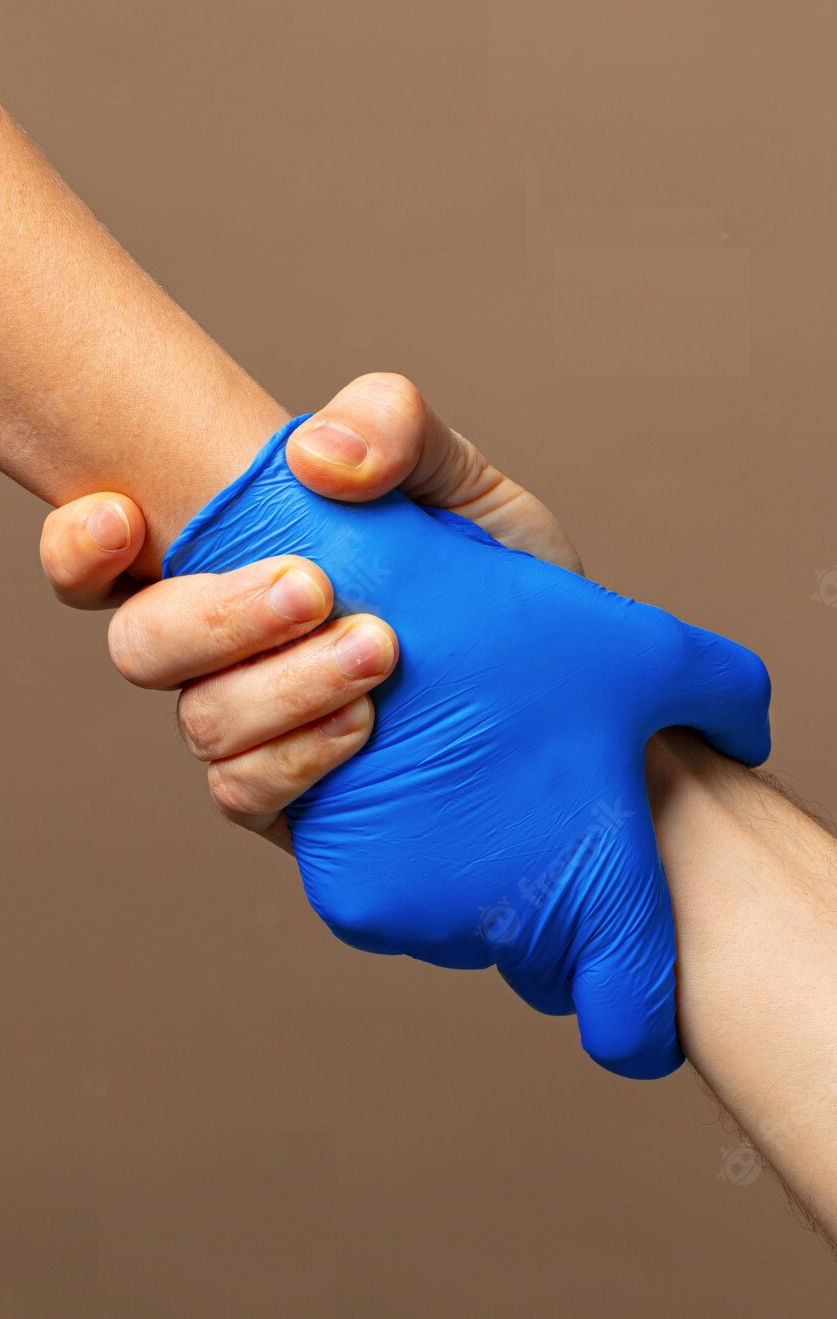
Both parties need to agree on glove usage prior to meeting.
A few years ago, a dear friend invited me for Pride weekend at his home in Houston. He wanted to fist for the first time and asked if I would bottom for him.
— FF Chronicles: 15.06.0041
The Such FFun podcast discusses glove shaming and consent between partners in Season 2 | Episode 6 - (FF Tops):
Standard Practices refers to common sense behaviors related to fisting activies. There are four standard practices related to gloves.
Who: Top
When: Prior to Insertion
What: Hygiene
If you use gloves to prevent introducing microorganisms into the fist chute, then timing for donning gloves is critical.
Help the bottom get situated in the sling or fisting arena, then put your gloves on immediately before penetration.
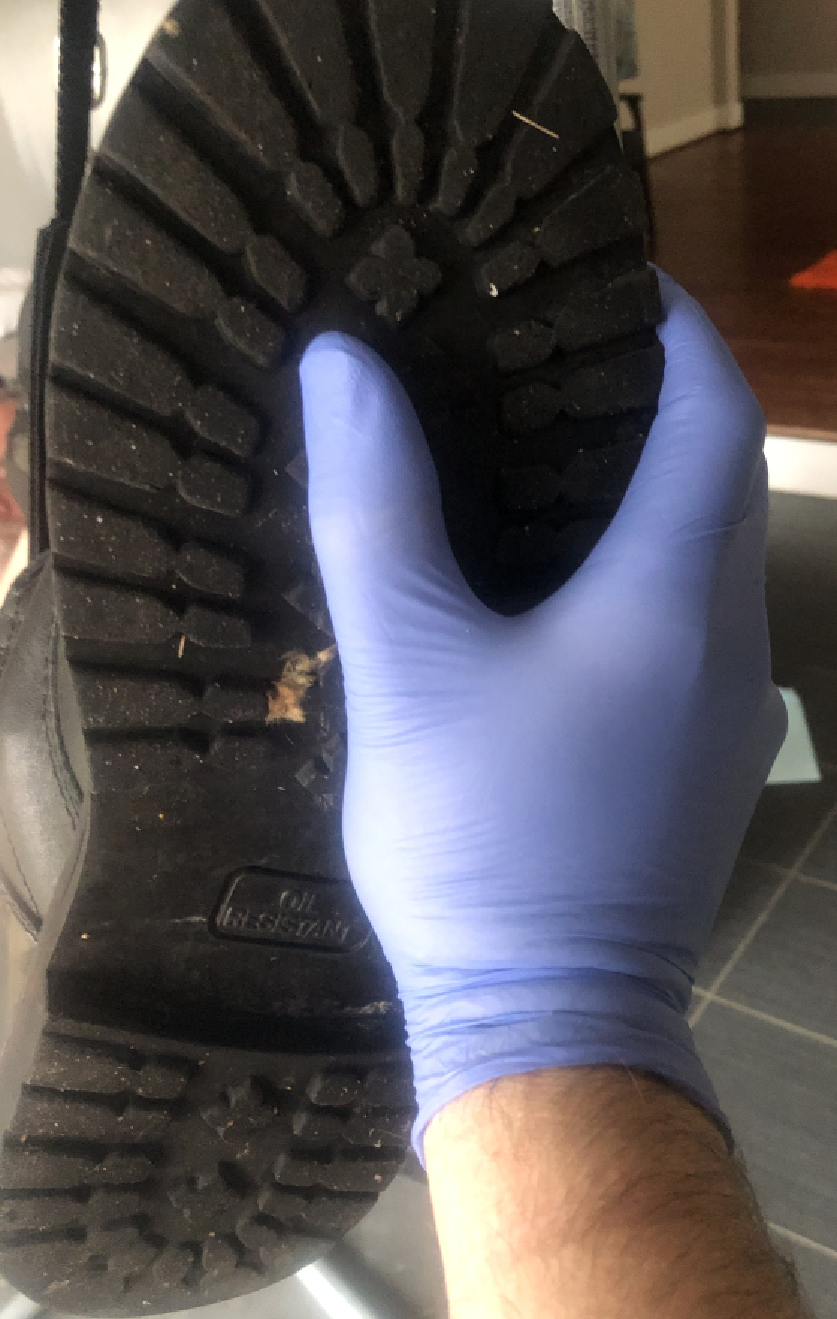
Helping a bottom into the stirrups after donning gloves is counterproductive. Gloves become contaminated prior to entering the hole.
Larry Shockey, the orignator of FistFest, shares this piece of advice in his book, the Sacred Art of Fisting:
"I’ve seen lots of tops glove up, put the bottom’s feet into the stirrups, adjust the chains, arrange the papers on the floor, and then reach for the lube. NO! NO! NO! I’ve even had tops drop a glove on the floor and bend down to retrieve it to put it on. NO! Gloves are cheap. It’s easy to forget. Just throw away the contaminated glove and get a clean one."
— Sacred Art of Fisting, 2012
Who: Top
When: Throughout Session
What: Hygiene
Most venues are not built with post-fisting cleanup in mind. Sinks may be too shallow to wash. Soap may be unavailable. Faucets may have restricted water output.
Outdoor venues or semi-public areas usually lack proper cleanup facilities.
Bring and wear gloves when playing at these venues—especially if you are fisting more than one person.

Glove use decreases cleanup time and cross contamination of bottoms in venues with limited washing facilities.
I coordinated my first trip to Amsterdam to coincide with the Dirty Dicks monthly fisting party at the Amsterdam Eagle. I packed a small gear bag with lube, poppers, and gloves and headed to the venue to play.
The event did not disappoint. I bottomed for four different guys and topped six. Unfortunately, I only brought four pair of gloves. This led to a little predicament with Rene, my last bottom.
"I'd love to feel your guts when we are done with him" I told Rene as we alternated our hands in and out of Jon's gaping hole.
"Great, I'll go get ready" he replied and promptly disappeared to prep himself and lay claim to a sling.
Meanwhile, Jon had enough pummeling and called for a break-break. I cleaned him up and thanked him for the pleasure of playing inside him, S2S. Then I headed to the bathroom to clean up.
Although I hadn't noticed before (since I had worn gloves), the sink was incredibly shallow and the water only stayed on for a few seconds at a time. Jon was into width-play, so my arms were lube free, but it took ten minutes to completely wash just my hands. After finishing, I hustled out to the sling to delve into Rene's fagpit.
"I was beginning to think you had stood me up" Rene said as I approached.
"Yeah, I'm sorry. I didn't realize that cleaning up after Jon would take so much work. The sinks here are shallow and leave much to be desired."
"Well, my desire is for your hand and arm. And my hole, it is anything but shallow! Push it in."
The rest is history.
— FF Chronicles: 18.12.0323
Who: Top
When: Between Partners
What: Hygiene
If you are wearing gloves for hygienic reasons, you still need to wash your hands and lower forearms between partners.
Most gloves cover about about 2.5 centimeters (1 inch) up the wrist. The anal canal is that same length, if not a bit longer. This means that as a top playing with shallow bottoms, your wrist and lower forearm is still likely be exposed to lube. Any deeper play guarantees exposure unless you are wearing opera length gloves.
Washing the hands and forearms prevents transfering microorganisms into your bottom.
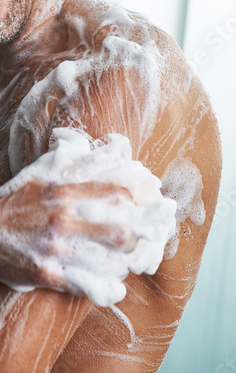
While you may not need to scrub up to the shoulder, basic fisting typically exposes the lower forearm (above the glove line) to lube.
Erik and I had just wrapped up an intense fisting session where his small arms had slipped in past the elbow—a first for him. He had used both the right and left arms with depth play, but per my request, primarily played with the left arm.
After I said "OK, I'm done!", I asked him to hand me the paper towel roll.
"Oh, I'll clean you up good!" He said.
"I know you will, but it's not me that I'm worried about" I interupted. "Here, give me your arm."
I ripped three full squares of paper towels from the roll and laid them across my chest. Eric placed his arm on the squares, and I wrapped the edges around, covering his arm completely. I then carefully slid the towels down his arm until we passed the fingers.
"What's this for?" he asked.
"I find that if we don't squeegee the lube off now, your sink time will be 5-10 minutes clearing lube off your arm. And while it doesn't matter here with just the two of us and my deep sink, at events, you may not have the luxury of good washing facilities to clean up between bottoms. So when you wrap up with a deep bottom, always clean your arm first before starting on the bottom." I responded.
"Okay, I guess. I still don't understand why" he said, as he began wiping lube from my ass.
"You'll see in a few minutes."
Fast forward eight minutes. Eric is at the sink, scrubbing desparately on his right arm. Since the lube had already dried on this arm, we didn't squeegee it immediately after the session ended.
"I get your point! I've never had to spend this much time cleaning up because I've never had lube this high. The left arm was easy, but this right arm is taking forever."
"Can you imagine if you were playing with a group! High cleanup takes a while, so do what you can to minimize your efforts, but always - always - always respect your bottom and clean up your entire arm so he isn't exposed to contaminants from the last guy."
— FF Chronicles: 21.09.0524
Who: Top
When: Throughout Event
What: Hygiene
Disposable gloves are cheap and plentiful. Never put your partner at risk for contamination by wearing the same gloves between bottoms.
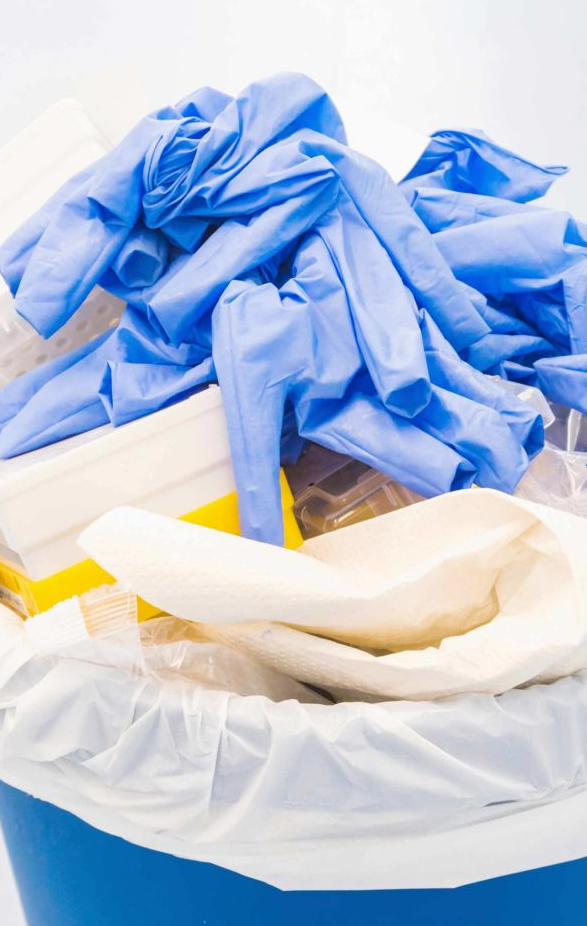
Disposable gloves should be removed and discarded after each partner.
Ethan told the group that he had cut his hand yesterday and needed to wear gloves during the play party today. All of the bottoms in attendance agreed, even though S2S was the standard for the regular play parties.
"Do I need to change gloves between bottoms?" he asked.
"I'd prefer you did. Even though I'm not a fan of gloves, if we have to use them, we might as well get full benefit from them" said Zeke, another bottom at the party.
"I agree. Gloves tend to agitate holes and cause more inflamation. While I don't think this necessarily increases transmission of microorganisms, it certainly will eliminate any concern. Besides, when you go to big parties, the standard is don't reuse gloves between holes." I replied.
By the end of the party, the trash can was half full of gloves. Ethan looked at the stack with a sense of pride and accomplishment.
"Damn boy, that's a ton of gloves. You must be a content soul right now!" a group member exclaimed.
Ethan smiled.
"My hand is very, very happy."
— FF Chronicles: 21.10.0533
In this section: Material | Color | Environmental Impact | Size
Gloves can set the scene or exist solely as a peripheral safety component. With the exception of size/fit, selection of the appropriate glove is largely a matter of personal preference.
Gloves are manufactured from rubber, plastic, silicone, and leather.
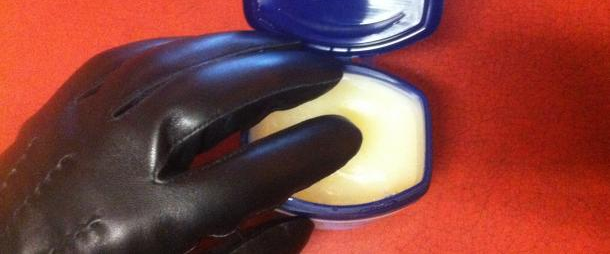
Lubrication, such as vaseline, can damage leather.
Thermoplastic Elastomer (TPE)
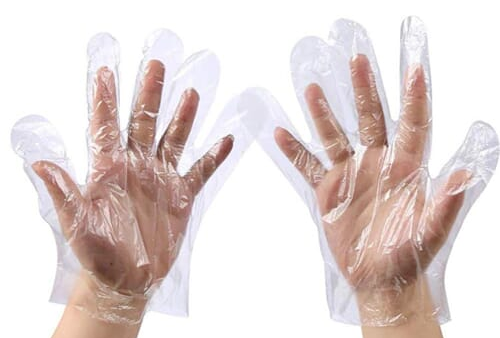
Most readily available vinyl fits poorly and agitates holes.
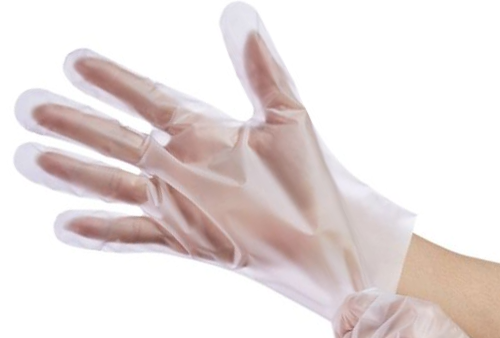
TPE gloves lack the elasticity of latex gloves.

PVC gloves come in a variety of thicknesses for different uses.

Some catsuits and gloves are made of PVC.
Gloves come in a variety colors; however, the most ubiquitous colors include black, blue, and white. The composite material of the glove affect the intensity of color.
Many men prefer black and red gloves over other colors because black and red are most commonly associated with fisting. While they may seem appropriate, they have the potential to mask early signs of bleeding. Consider ligher shades such as blue, white, or green if safety is your primary concern.

Disposable gloves made of vinyl, latex, or nitrile are offered in various different colors. Selection may be influenced by your specific safety needs.

Latex is a biodegradable material derived from rubber trees. Latex gloves may have additional additives (such as dyes) that are harmful to the environment after decomposition.
Some fisters base glove selection on environmental impact. The least impactful and most impractical option is a set of long-lasting, reusable gloves that can be sanitized between uses.
With disposable gloves, the following considerations apply:
biodegradable nitrile gloves to locate vendors that provide this type of glove.Loose gloves agitate a hole and result in early termination of a session. Gloves should have a tight, snug fit to prevent drag and pinching.
Disposable gloves are unisex with universal sizing. The best way to determine your glove size is to sample different sizes while visiting your doctor's office.
If this option is unavailable, measure your hand and use the following sizing chart to determine your size.

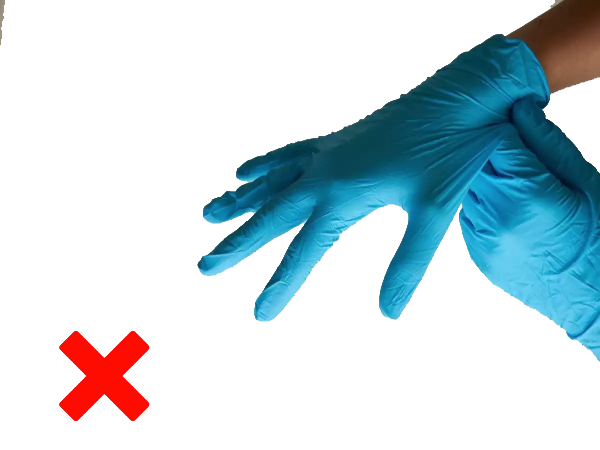
Wrinkles after application indicates a glove is too large for the hand. Consider one size smaller to eliminate discomfort in the bottom.
| Unisex Sizing Chart | ||
| Size | cm | inch |
|---|---|---|
| XXS | 16.5 | 6.5 |
| XS | 17.5 | 7.0 |
| S | 19.0 | 7.5 |
| M | 20.0 | 8.0 |
| L | 23.0 | 9.0 |
| XL | 24.0 | 9.5 |
| XXL | 25.5 | 10.0 |
| XXXL | 28.0 | 11.0 |
Table 4-1: Disposable Glove Size ChartWhile XXS, XS, XXL, and XXXL gloves are available, most men fall within the S - XL range. |
||
The following instructional guide(s) will help you:

Glove size is determined based on the circumference measured with a flat palm.
If you do not have a measuring tape, take a sheet of letter or legal paper and wrap it around your hand as directed above. Use the long side of the paper, as most hands are eight to ten inches around. Mark where the paper meets, then use a ruler to determine the length of the marked paper.
Skin will typically absorb lube and decrease drag. This allows for greater variability in the viscosity of the lube. Both thick and thin lubes are functionally appropriate. By design, gloves do not replicate this state.
Gloves tend to repell lube, especially with a tight first ring or collapsed upper fist chute (in depth play). A tight, first ring can effectively squeegee off the majority of lube applied to the glove. To counter the squeegee effect, you can do the following items:

Funneling lube into a gaping hole allows for internal lubrication of a glove, this eliminating lube loss due to the squeegee effect.