Principles

Principles of depth fisting cover general practices, cultural considerations, and expanded vocabulary.

For those new to depth play, principles provide the background that ensures informed planning and safer development of depth skills.

General Practices

Depth Fisting

Depth fisting (or depth play) is a category of fisting that involves insertion of the hand beyond the wrist. Depth is a trait of a hole, so the term "depth fister" refers to a bottom with depth capabilities. In a fisting worldview, it doesn't make sense for a top to call himself a depth fister, even if he has extensive experience fisting deep holes—some tops still refer themselves as depth fisters; however, the term more appropriately corresponds to bottoms.

Depth play is not the same for every bottom. Anatomically, some achieve greater depth by progressing beyond the second hole into the upper fist chute (sigmoid colon). Others develop depth through the stretching and elongation of the lower fist chute (the rectum and anal canal). Some experience both rectal elongation and sigmoidal progression.

Among fisters, the adjective "deep" is a relative term. Some fisters may define deep as mid to upper forearm. Others consider low forearm play as depth fisting. Fisting to or beyond the elbow is universally condsidered depth fisting.

Depth play can be coupled with width and punch play. It can be slow and methodical. It can be fast and furious. It can involve pistoning. When coupled with other play types, risk for injury increases.

Figure 1.1: Shallow Depth

Anything below mid-forearm is considered shallow depth among depth fisters.

Figure 1.2: Elbow Depth

Upper forearm advances are considered extreme depth among most fisters.
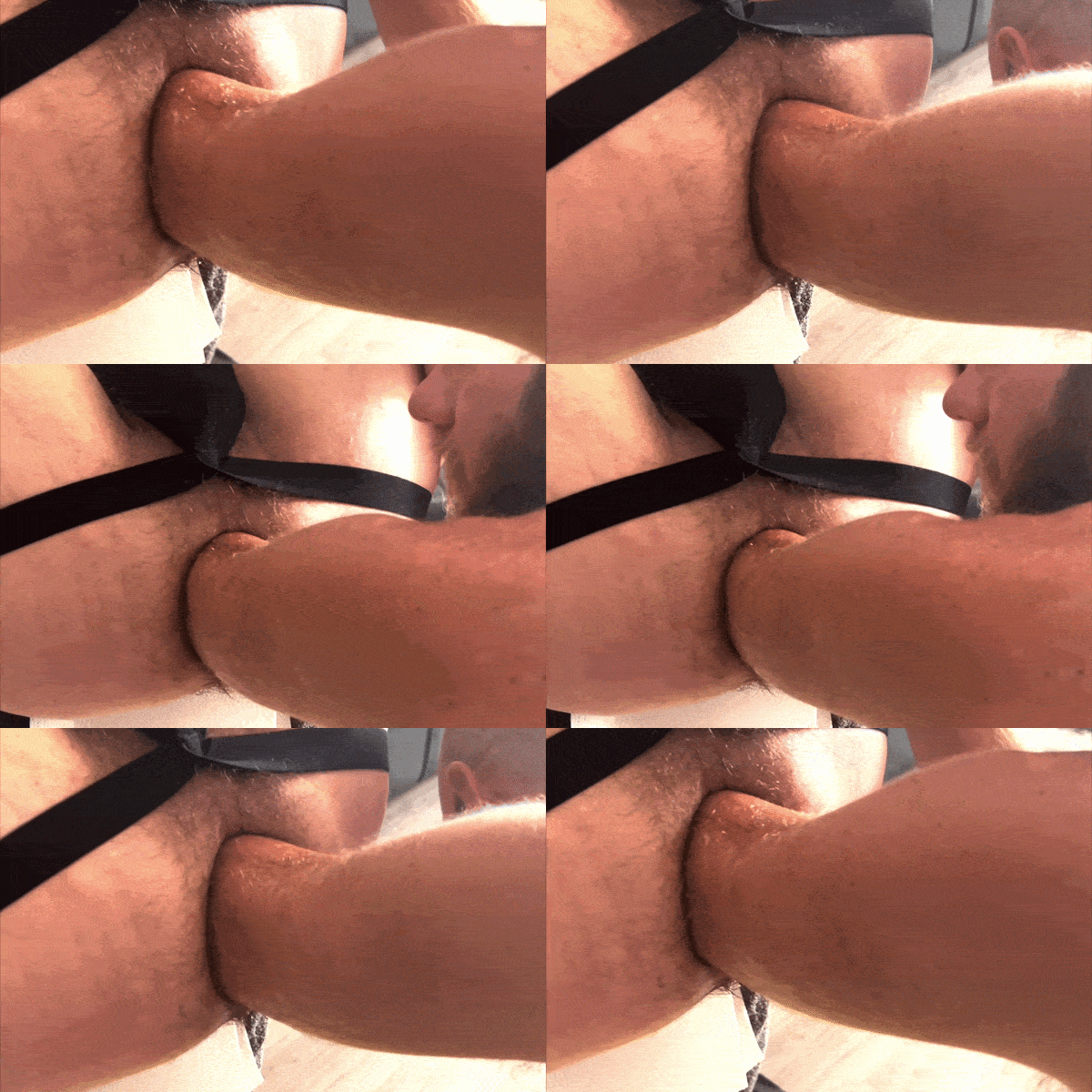
Figure 1.3: Bicep Depth

Fisting beyond the elbow onto the bicep is rare even among depth fisters.

Figure 1.4: Shoulder Depth

Fisting to the shoulder is so rare that it is a once-in-a-life-time experience for most tops.

Other Principles

Lor ipsum dolor...

Body Modification

Like other types of fisting, depth play changes the body and how it functions. Depth fisting involves altering the size, shape, position, and elasticity of the upper and lower fist chutes. Depth fisting also alters the responsivity of natural reflexes involved in digestive and waste elimination processes.

Commonly reported changes include decreased douching times, larger bowel movements, delayed bowel movements (after fisting), and minor hip/pelvis realignment.

It is short sighted to believe deep play will have no effect on the body; however, it is equally short sighted to think it will result in major lifestyle changes. Minor changes to your toileting and douching habits might occur.

For example, you may have to douche deeper or you may only have a single bowel movement per day as compared to your frequency of bowel movements prior to gaining depth skills.

Mastering extreme depths involves mastering many different body systems through a process of conditioning. For example, a bottom will need to complete activities that safely stretch the sigmoid colon while repressing the reflexes that those very stretches trigger. This type of change occurs by repetitive work across several dozen sessions.

A good analogy to fist chute development/modification is strength and muscle training at the gym. Enhanced and visible muscle development will not occur with a single workout, nor with workout once every other week. Workouts must be regular and consistent. Additionally, workouts that fail to integrate the entire body, mind, and lifestyle are typically ineffective. Depth fisting and deep hole development require commitment and regular practice.

Depth Glossary

Depth fisters integrate a lot of anatomical terminology into their vocabulary to discuss their holes. Compared to elementary/basic fisting, there are very few vernacular terms used to discuss depth play. The following terms may be unfamiliar to new or inexperienced depth fisters:

Proctology

Depth fisters are frequently able to discuss the anatomical components of the upper fist chute, but most have sparse knowledge of the how these components are limited by body physiology (function) and tissue architecture. In other types of fisting, this advanced knowledge is not very relevant. In depth fisting, utilizing this knowledge can help increase the total depth attained and can prevent serious injury.

Courses that provide additional insight into anatomy and physiology can improve the fisting experience for both tops and bottoms. These courses are part of the Anatomy and Physiology learning pathway in the Handball Academy.

Upper Fist Chute
Figure 2.1: Upper Fist Chute

The upper fist chute consists of the sigmoid and descending colons. Some fisters also include the transverse colon as part of the upper fist chute.

Traits and Characteristics

The nature of a depth hole affects the technique used by the top to achieve maximum insertion. Apart from diameter, several other characteristics define holes: expandability, straightness, responsiveness, elasticity, and sensory capacity. Note that each segment of the fist chute can express one of these same characteristics in a different manner.

Expandability

The opposing states of collapsed and expanded describe the interior chamber of a hole. An expanded state indicates a hole or segment is cavernous and the GI tract is hollow and airy. It is easy to navigate as the path is clear and open. A collapsed state is similar to a sock. There is no open pathway, and a top must search for the path to continue forward progression.

By default, the hole is collapsed. This state can change temporarily by infusing the hole with air or even liquid. Some bottoms can ingest air via a gulping hole technique, while others insert air via tubes or specialized punching. Still others limit any introduction of air in the bowel, as it can be painful and replicate symptoms of constipation or injury. Injection of liquid may cause the upper chambers to open up in order to draw fluid out of the rectum.

Cave
Figure 2.2: Expanded/Cavernous State

A cavernous hole is typically very roomy and allows for easy movement of the fist with minimal touching of the lining of the GI tract.

Sweater Sleeve
Figure 2.3: Collapsed State

A collapsed hole is similar to a sweater sleeve or sock. The hole snuggly embraces the fist and requires the top to find the path into the next segment of the hole.

Straightness

Holes and hole segments can also be classified by straightness. This characteristic is applied to the rectum and sigmoid colons as the descending colon is definitionally straight. In a straight hole, the path to depth is clear and involves very little work by a top to proceed to further depths.

The term rectum originates from the Latin word, ‘recta’, meaning straight. Rectum is a misnomer. Early anatomists inaccurately compared human rectums to those of livestock and assumed a similar straightness. In standing, lying, and some sitting positions, the rectum is concave. It will straighten out while squatting or in certain sling positions. Additional features inside the rectum may create curves or an appearance of curvature.

The sigmoid colon is aptly named because it typically has an S curve. Advanced bottoms and genetically gifted bottoms typically have straighter and longer sigmoid colons, which, like the rectum, may become straighter based on the position of the bottom.

In most bottoms, the sigmoid abruptly curves immediately after the second hole (or recto-sigmoid junction). The curve creates a small pocketed area that creates a natural damn for fecal material. When an experienced depth bottom is positioned correctly, this pocket can straighten out naturally or be stratigtened with minimal effort by the top.

After this pocket, the sigmoid eventually veers to the left side of the body to connect to the descending colon, which is affixed to the side of the body and is always straight. The sigmoid colon is relatively long and often floats. In established depth bottoms, the floaty nature makes the sigmoid appear straight as it wraps around the tops hand and arm.

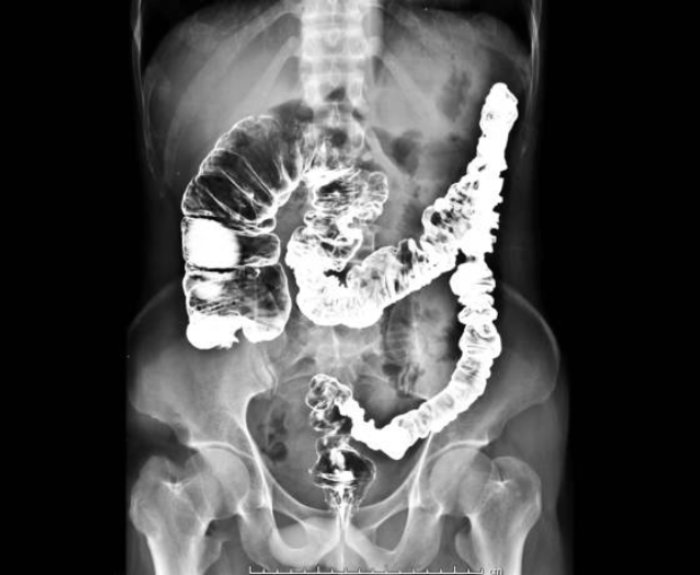
Description of First Image in Title Case
Figure 2.4 [ A — D ]: Curvature of the Upper Fist Chute

X-ray images depict large variances in curvature of the sigmoid colon. While some are naturally straight, others have multiple curves and twists. Some of this twisting can be straightened overtime by the repeated use of firmer toys. The straightening process is gradual and should not be rushed.

Responsiveness

The third characteristic common in depth chutes is responsitivity, or the ability to react to stimuli. In the case of fisting, responsivity is measured by how easily a hole expands, straightens, and resists the physiological processes that expel the contents out of the body. In lay terms, this is referred to as the greediness or the hungriness of a hole.

Certain types of touch, preparatory actions (such as douching), observing porn, or even simple thoughts about an upcoming session can result in a Pavlovian response in the fist chute. In these circumstances, the tissues of the chute begin relaxing and pulsating in preparation for depth play.

VOCABULARY

Responsivity

  1. Noun a measure of responsiveness.

Responsitivity

  1. Noun the condition of being responsive (uncountable).

Elasticity

Elasticity refers to the ability of the tissues of the hole to stretch in response to an applied force. While related to expandability, it is not the same. Expandability is a physiological response to touch, whereas elasticity results from forces applied by the hand or arm.

Pressure on the Sigmoid
Figure 2.5: Puncturing the Upper Fist Chute

A plastic bag is easier to tear when full and taut. The upper fist chute is prone to puncture or tear when overloaded or stretched tight. The rectum is at least twice as strong as the sigmoid and can handle rough play and extreme stretches.

Differences in tissue composition between the upper and lower fist chutes affect elasticity, making the upper fist chute considerably more susceptible to injury.

The first hole and lower fist chute exhibit high elasticity because their tissues are thick and dense. In contrast, the tissues of the upper fist chute are approximately half as thick and considerably less dense. As a result, they cannot stretch to the same extent. A punch or jarring movement that is well tolerated in the rectum may generate sufficient stress to injure the upper fist chute.

In the upper fist chute, elasticity is expressed primarily through lengthening rather than widening. Most depth-related injuries occur adjacent to the second hole, where tissue elasticity changes abruptly. Although similar injuries may occur at greater depths. When a firm object, such as a toy, an arm, or both together, exceeds the stretch capacity of the second hole or sigmoid colon, excessive tissue tension may result in perforation. Safe progression beyond the second hole requires gradual conditioning over many sessions. Attempting to apply pressure to "push through" without adequate preparation greatly increases the risk of injury.

Sensory Capacity

The types of nerves found in the upper fist chute differ from those in the lower fist chute. The most commonly reported sensations during depth play are extreme fullness while the arm is present and rectal decompression (poophoria) when the arm is withdrawn. Traditional sensations such as touch are greatly diminished in the upper fist chute. Instead, depth play combines sensations originating outside the hole, within the rectum, from pressure against the pelvic structures, and from stretching within the upper fist chute. Together, these sensations can produce intense, full-body orgasms.

During the heat of the moment, it is easy to forget limited sensory capacity. Implementing regular pauses to check in on one another is the best way to prevent injuries.

VOCABULARY

Rectal Decompression

  1. Noun Phrase a physical relief exprienced immediately after defecation caused by decreasing or eliminating sensory input from pressure receptors within the anal canal and rectum.
    Rectal decomression is known colloqually as poophoria.

Referential Framework

There are two methodologies for measuring depth, each uses a different set of reference points.

Landmarks (Internal)

The first method is based on landmarks or segments inside the fist chute.

For example, one might say, “We fisted past the second ring” or “He was in the transverse colon.”

This measurement strategy is problematic. Segments and landmarks can easily be misidentified and can lead to incorrect and potentially dangerous assumptions with future partners. A reckless or inexperienced top may push too deep or too hard based on a bottom’s inaccurate depth claim. This results in tearing in the upper fist chute.

Holes of the Fist Chute
Figure 2.6: Landmarks as Reference Points

Using internal landmarks is problematic. Many fisters believe they have reached the third hole, when in fact, they are in a haustral segment (false hole).

Many fisters misinterpret depth because they lack understanding. A fister may believe he is past the second ring when an arm is mid forearm deep. Because the anal canal and rectum can stretch up to 12 inches, this belief may be incorrect.

Arm (External)

The second method for measurement is based on the arm as the reference point.

Without context, this can also be dangerous. For example, “He was mid-forearm” or “We fisted past the elbow” reveals nothing about the arm size of the top. The stature of both the bottom and top must also be revealed.

For the top, this assessment includes his height and arm size. Short tops with lean arms reach greater depth. For the bottom, this includes height. Tall bottoms have significantly more interior real estate than a short bottoms and can typically take an elbow or bicep easier.

Fisted Hole with Arm with Ruler Markings
Figure 2.7: Arm as a Reference Point

Measuring from the reference point of an arm is more objective than measuring by landmarks inside the bottom due to shifting segments and anatomical differences.

To transform this measurement into an objective standard, measure the depth achieved on the arm with a ruler or tape measure. For the most accurate measurement, consider the position of the hand inside the chute. A hand with outstretched fingers can be over five centimeters (two inches) longer than a closed fist.

Preparation

For most depth fisters, physical, mental, and scene preparation is almost second nature. During the hundreds or thousands of development sessions, their minds and bodies have been conditioned to respond to very specific routines that minimize hole prep and maximize sirenity (appropriate headspace). Those engaged in topping deep holes should follow the lead and direction of their depth partners in maintaining that sirenity.

Physical Considerations

To prepare for depth fisting, there are serveral physical considerations for both tops and bottoms.

Hygiene

For tops, little changes related to hygiene. Handwashing should expand to include arms.

Douching routines may change for bottoms with depth play. Cleanouts may now require additional time, diets may need modification, and longer douche nozzles may be necessary. Base-coating and bio-hacks can decrease the length and strain of a cleanout. Regardless, at extreme depths, a perfect cleanout is never a guarantee, so both partners should be mentally prepared to deal with accidents.

Overstimulation

Depth play can be very rewarding because of intense stimulation in both the upper and lower fist chutes. Too much stimulation, especially in the lower fist chute, can overwhelm the bottom and decrease his depth capacity.

Hand and Arm Preparation

Tops can decrease overstimulation by following best practices for hand care. Unkempt nails, hang nails, rough hands, stubble from shaved hands and arms, and extra course body hair can all be irritants that affect the bottom. Preparation practices help remove or address most of these stimulants.

Figure 3.1: Hole Irritants

[ A ] Sharp nails create cuts. [ B ] Hang nails scratch tissue. [ C ] Stubble irritates the first hole. [ D ] Coarse fur increases nerve stimulation in the first hole.

Hole Preparation

Bottoms can overstimulate a hole through excessive or rigorous douche practices. An inflamed hole from a difficult cleanout diminishes depth capacity as the fisting experience is hobbled with an overactive nervous system.

Modifying or altering cleanout routines and diets before a depth session with a focus of new gains is ill advised. An unfamiliar routine or food can reak havoc on a cleanout and the subsequent play session.

Lengthy Timer Outside Shower
Figure 3.2: Douching Inflammation

Excessive or long douches cause inflammation causing unwanted hole stimulation.

Lube Preparation

Consistency in lube between sessions helps bottoms stay focused on depth instead of lube inadequacies or unexperienced sensations. For most sessions, a bottom should use his favorite recipe and only switch when he wants to experiment with a new lube that might help him gain more depth.

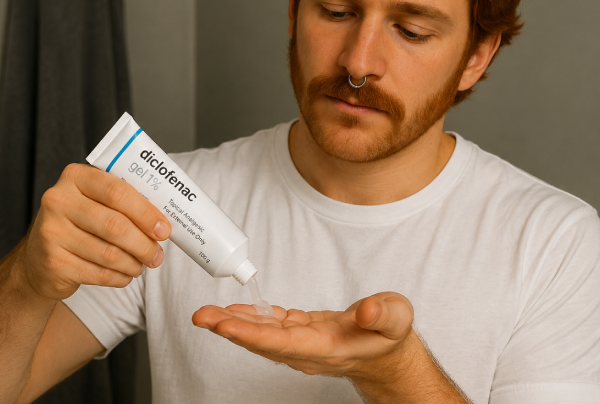
Numbing creams and analgesic additives such as clove or mint oils can trigger complex neural processes that overstimulate nerves to attain a desired effect. Chems inserted through booty bumps, especially corrosive chems including meth, damage tissue linings and can ultimately affect associated nerve tissue.

Additives for Lube
Figure 3.3: Lube and Cream Modifications

Changes in lubrication base, viscosity, and additives can irritate a hole causing overstimulation.

Psychosocial Considerations

In depth play, seemingly inconsequential things can affect depth acheived, including psychological and social factors such as attaining the right headspace and playing with the appropriate partner.

Headspace

Performance

Understanding the motivation for depth can unlock mental blocks affecting the hole. For example, if a bottom is motivated by the "wow" factor in a room as an arm goes deeper and deeper, then capitalizing on that attention can create the headspace he needs to get deeper. On the flip side, this same motivation can cause a bottom to take risks in order to garner an audience and receive a performance high.

Likewise, if a bottom needs extreme focus, playing in an area without others watching may help him gain greater depth.

Figure 3.4: Public/Performative Fisting

For some fisters, performative fisting creates the headspace for a relaxed hole.

Meditation

Reaching a state of body and hole sirenity can be obtained through regular meditation and rhythmic breathing.

Daily meditation routines that encourage deep connection with the body help depth bottoms calm down when sensory overload occurs during a session. Meditation focused on the pelvic and abdomen help focus the mind so that the colon, the anal canal, muscles of the pelvic floor, and diaphragm all relax. When these anatomical features are in a relaxed state, an arm can slide further in and reach the lower rib cage.

There are limited meditative routines focused on the abdomen. Fist Theory has several published on their podcast channels.

Description of Figure in Title Case
Figure 3.5: Meditation

Daily meditation helps new depth fisters focus on the enviroment around them and how their body interact with it and others.

Partner Selection

Partner selection can make a substantial difference for fisters seeking to develop or improve depth skills. The ideal partner for developing depth is versatile and has mastered basic fisting skills such as lube competency, reading body language, breathing, and cultivating the proper frame of mind.

For those seeking to improve their bottoming skills, a partner with depth experience can help assess skills and barriers to advancement.

For those seeking to improve their topping skills, the ideal partner is a bottom that can typically take a fist to the high forearm or elbow crease. Most experienced depth tops confide that the depths attained during a session are due to the bottom's skills rather than the top's skills.

Additionally, a partner who can play on a regular basis (at least once or twice per week) will help accelerate development.

  • Characteristics of an Ideal Depth Partner
  • Depth Experience
  • Regular Availability
  • Mastery of Basic Fisting Skills

Environmental Considerations

Like traditional fisting, depth play can occur almost anywhere at any time (assuming the bottom is prepared). If the primary purpose of depth play is to increase depth capabilities or learn new skills, a quiet, distraction-free environment (such as a bedroom or playroom) is preferred. Such places allow a bottom to relax and establish the appropriate headspace to open up for greater depth. In contrast, if the objective is social or performative, group play events, bathhouses/saunas, or kink festivals may be appropriate.

Regardless of the selected play space, effective communication between the top and bottom is essential. Partners should be able to communicate clearly verbally or with hand signals. Dark, noisy environments are generally inappropriate for depth play unless both partners have an extensive play history and a well-established understanding of each other's boundaries, body language, and physical cues.

A final environmental consideration is clean up facilities. Depth play has an increased likelihood of fecal disturbances. An environment with quick or easy access to running water is desirable for both hand washing and touchups.

Figure 3.6: Environment for Learning

A makeshift or actual playroom with appropriate furniture and ambiance can remove distractions that can limit advancement during depth training.

QUICK REFERENCE

Penetration

After building a background knowledge regarding depth anatomy, safe practices, and preparing the scene and the participants, penetrative activies can commence.

In addition to this course, Fist Theory has specialized courses for those who want to develop their topping skills and those who want to develop their holes.

Progression

The majority of men who regularly bottom in traditional sex can complete an intense, two-week conditioning routine that will allow them to take a small fist. Safe progression beyond basic/traditional fisting will take much longer.

The following are common milestones in a traditional fisting journey:

Milestone

Description

First Ring

Fist fully inserted into the anal canal with no portion of the hand visible.

At this depth and skill level, the reflexes in the anal canal are the primary factor for expulsion urges.

Low Forearm

Fist inserted completely past the anal canal into the rectum. The first six centimeters (2.5 inches) of the arm are no longer visible.

At this depth and skill level, reflexes within the anal canal are firing with less frequency and intensity than at initial penetration. This is due to the decrease in tension as the fist is no longer stretching the anal canal. Reflexes in the upper rectum may be firing with greater intensity.

Mid Forearm

Generally, full penetration of the second ring with at least one finger to the outermost knuckle. Rectums can stretch extensively and fists may be closed, so ring penetration is not always an accurate measuring tool.

Pressure receptors in the rectum are primarily responsible for internal pushback; however, any pressure against the first ring may also trigger straightening and increased peristalsis.

Doubles - Small

Both fists fully inserted into the anal canal or rectum, with no portion of the hands visible. Achieving this milestone typically prepares a hole for the wider portion of the upper forearm.

The reflexes associated with the anal canal and rectum are firing at 100%, triggering expulsion impulses.

Upper Forearm

Generally, full penetration of the second ring with all four fingers and a portion of the thumb. Like the mid forearm, variances with open/closed fists and the elasticity and stretch of the rectum may render finger positions inside the chute irrelevant.

Increased peristalsis occurs, especially if new depth is obtained and the body doesn’t know how to interpret what is occurring.

Elbow Crease

Within a centimeter (half inch) of the elbow crease.

At this depth and those depths just beyond the elbow, positioning is important to reduce expulsion impulses that are generated in the anal canal. Undue pressure on the canal due to bad angles (crowbar position) intensifies peristalsis impulses from the sigmoid and expulsion impulses in the rectum.

Doubles - Large

Both fists fully inserted into the anal canal with no portion of the hands visible. Achievement of this milestone typically prepares a hole for the two bony protrusions at the elbow.

Like small doubles, this causes full firing of anal canal and rectum reflexes. A bottom must grow accustomed to these impulses and make conscious effort to rewire the brain to accept these as pleasure seeking sensations instead of expulsion sensations.

Olecranon Process

Full insertion of both bony protrusions of the elbow into the anal canal.

This insertion replicates the initial euphoria and tension that is similar to taking a fist for the first time. The feelings are intense, and the brain is trying to interpret what the signals from the nervous system mean.

Low Bicep

Full insertion of both bony protrusions of the elbow past the anal canal.

Low bicep insertion is similar to low forearm insertion. Sensations are similar because the olecranon process acts like a wrist. If the olecranon process is stuck inside the anal canal, high expulsion signals are firing. Once the olecranon process is through the anal canal, a relaxed state is easier to achieve.

Mid Bicep

Midpoint on the upper arm inserted into the hole.

Sensations of the lower and upper fist chute are replicated. The body now has to interpret and integrate what is happening higher up. Many of the expulsion sensations are still generated by the anal canal as the increased diameter of the arm re-triggers its reflexes.

High Bicep

Full insertion of the bicep into the hole.

No data available on body systems available. Some bottoms report that the diaphragm and stomach may begin to send signals to the brain that something is causing atypical pressure.

Armpit

Full insertion of the bicep past the anal canal.

No data available. Some bottoms report that the diaphragm and stomach may begin to send signals to the brain that something is causing atypical pressure.

Table 4.1: Common Milestones for Depth Fisting

Twelve significant milestones for depth players start with basic fisting and increase to full-arm depth. It is uncommon for a depth player to reach extreme depth without mastering doubles of all sizes, which are also width milestones.

Regular practice sessions with toys or skilled partners are required for meaningful gains. Frequency of hole play dictates the speed of progression: anything less frequent than twice a month is typically ineffective, as the fist chute loses memory of previous sessions. The timeframe for developing an armpit deep hole is dependent upon genetics, surgeries, and conditioning. For some, depth occurs naturally. For others, extensive work is needed. Even with regular play and training, for most fisters, reaching the elbow can take elbow depth can take five or more years. Reaching the armpit can take an additional fifteen years.

Lubrication

Lube competency is typically a skill associated with tops; however, in depth play, strategies for lubrication application originate with the bottom. Most depth bottoms use very personalized or specific lubrication processes. A top demonstrates lube competency by actively asking about the bottom's specific needs and strategies and following the instructions provided. Following his directions helps create the trust and required headspace necessary for deep progression.

While distribution methods vary widely based on individual preferences, a novice bottom is easily spotted by a "more is better" mindset. Lacking a nuanced strategy, beginners often go overboard with lube distribution methods in an attempt at quick depth gains.

For example, a bottom may assume that a calf feeder or a long injection tube will saturate his insides and make depth easier. This assumption is dangerous and leads to false courage and reckless behavior. Tube injections can easily perforate colons. Extra courage from excessive lube may cause a tops and bottoms to push limits and perforate.

Relying on bad assumptions, improper tools, and potentially dangerous practices creates a false sense of security that can easily lead to accidents, specifically perforation.

VOCABULARY

Lube Competency

  1. Noun Phrase is the combination of observable knowledge, skills, and behaviors that an fister implements to successfully utilize lube in a fisting session.
    While skills are specific learned tasks, a competency represents the broader capacity to execute those skills effectively in real-world scenarios.
    Example: When fisting with David, you always have to ask for more lube; he shows very little lube competency.

Positions and Techniques

Positions

Depth fisting can occur in various positions; however, there are a few positions that are ideal for depth training and expansion:

  • Kneeling with Head Down | This position changes the position and pressure on the sigmoid colon, often decreasing resistance at depths beyond mid-forearm. Strategically placed mirrors can help provide eye contact if needed.
  • Suspended in Sling | This position can help in top/bottom alignment dynamics to ensure the arm and the torso are on the same plane and axis (thus reducing tension from crowbarring). Sling use can also shift some control to the bottom through the use of his legs (to alter his body position or push away from the top).
  • Laying on Back on Flat Surface | This position works similar to a sling, but gives a bottom greater control in contorting his body and altering position to allow further advancement.

Depth bottoms have specific preferences regarding their desired position. These preferences are typically tied to their development history. A bottom that learned depth fisting on his knees will generally prefer fisting in that same position in regular play.

Various other positions for depth play include squatting, hoisted in a sitting position, and standing. Squatting gives full control to the bottom. Hoisted in sitting or over shoulder takes all control away from the bottom. Standing is usually only an option for advanced fisters as the alignment makes depth play uncomfortable and unneessarily difficult due to anatomical alignments.

Techniques

Fisters seeking to develop depth tend to focus less on stimulation techniques and more on expansion techniques. Stimulation techniques are more likely to trigger expulsion reflexes, limiting further depth advancement. Once the desired depth is achieved, a depth fister may shift from expansion techniques to stimulation techniques.

Established depth fisters generally fall into two distinct camps:

  • Slow and Methodical Stimulation | Pleasure originates from sensations of fullness, forward pressure around the first hole, and slow, gradual movement within the upper fist chute.
  • Heavy Stimulation | Pleasure is derived from intense stimulation throughout the upper and lower fist chute, including punches, rapid pistoning, or abrupt movements.

Distraction techniques employed by tops may benefit less experienced depth players but are rarely necessary with advanced bottoms. Experienced depth players instead rely on breathing techniques, meditation, and, in some cases, poppers to regulate overwhelming sensory input. When poppers are used, many bottoms intentionally delay inhalation until maximum depth has been reached, maximizing their effect during the deepest portion of the session.

  • Expansion Techniques
  • Piston (Shallow)
  • Wanderer / Crawl
  • Tug Boat
  • Clarinet (Light)
  • Bore (Effleurage)
  • Stimulation Techniques
  • Piston (Deep)
  • Extractor / Seal Team Five
  • Zero-to-Sixty
  • Strangler
  • Bull in China Shop
  • Clarinet (Heavy)
  • Bore (Turbulent)

Distraction Techniques

Distraction techniques employed by tops may benefit less experienced depth players but are rarely necessary with advanced bottoms. Experienced depth players instead rely on breathing techniques, meditation, and, in some cases, poppers to regulate overwhelming sensory input. When poppers are used, many bottoms intentionally delay inhalation until maximum depth has been reached, maximizing their effect during the deepest portion of the session.

Misconceptions

A number of misconceptions related to depth play are held by fisters and non-fisters.

QUICK REFERENCE
Depth Ability
Claims or Assumptions

Any bottom can obtain extreme depth with regular practice.

Reality

Some men are not genetically designed for depth fisting. The layout and structure of the anal canal, rectum, and colon will not accommodate body modification. Surgeries and pre-existing conditions can be additional limiting factors.

Remediation

Bottoms with depth aspirations can begin training and conditioning for depth, but should use toys, depth peers, and skilled tops for regular assessment. If toys passing into the upper fist chute is always uncomfortable, then depth play may not be a valid pursuit. For additional information, see:

Depth Anatomy
Claims or Assumptions

Tops typically pass the third ring, or splenic flexure, during deep insertions.

Reality

The colon, including the rectum, measures 1.5 meters (five feet) in length when extracted from a cadaver. The nature of the smooth muscle (in a living being) shortens the intestine, but still leaves about a single meter (three feet) of channel.

Typical arms measure 38 cm (15 in) to 50 cm (20 in) from fingertip to elbow. This is the approximate distance from the anal canal to the bottom (distal end) of the descending colon. This distance, as well as other anatomical limitations make it extremely unlikely that the descending and transverse colons are breached in depth fisting.

Remediation

Learn depth anatomy, specifically focusing on retroperitoneal positioning of the third hole. For additional information, see:

Depth Trainers
Claims or Assumptions

A patient trainer, particularly one with small hands, can “open up” the deeper chambers.

Reality

Small hands, skill, and patience are not automatic keys to advancement into uncharted portions of the fist chute. The process is complex and takes a significant number of sessions where other factors come into play. Several of these factors involve preparations only the bottom can do. Just as a trainer in the gym can’t make his partner stronger, a skilled top cannot make a bottom deeper. He can provide assistance but cannot do the heavy lifting.

Trainers can also unknowningly trigger performance triggers that cause bottoms to take unnecessary risks that can cause perforation.

Remediation

Bottoms should play with toys alone to safely extend depth capabilities. For additional information, see:

Depth Advice
Claims or Assumptions

Depth bottoms know and understand the secrets to their depth.

Reality

Most depth bottoms obtained their skill over years of play, often with quarterly gains of a single millimeter. Occasionally, they experience a ‘jump’ where progress occurs rapidly; however, most do not record the factors that surrounding that rapid advancement. When asked, they will likely say ‘lots of practice’ instead of being able to provide any secret techniques or shortcuts.

Remediation

As a depth bottom, take every opportunity to play with other depth bottoms and pay special attention to your partner's breathing, chem use, body positioning, body shifting, and lubrication strategies. While a bottom can't verbally express tips or tricks, you can observe them occurring first hand (literally). For additional information, see:

Depth Toys
Claims or Assumptions

Long, skinny, malleable toys are sufficient to expand the fist chute.

Reality

While toys with these characteristics are important for depth exploration and conditioning, they also have limitations. At some point, the toys used in conditioning need to replicate the characteristics of an arm: rigid and straight.

Remediation

Add specific toys meant for exploration (soft) and expansion (firmer) to your didlo arsenal. For additional information, see:

Risks and Dangers

Any time that a hand approaches or passes through the second hole, injury and illness risk increases. Serious injury during depth fisting is rare when both fisters are experienced. The most common incidents in depth fisting include:

  • Gastrointestinal Upset | Diarrhea, cramping, or intestinal discomfort caused by irritation, excessive cleanout, poor hygiene practices, infectious agents, or reactions to lubes and lube additives.
  • Perforation | Tearing of the intestine resulting in infectious agents infiltrating the peritoneal cavity which can result in sepsis and death if not treated immediately.
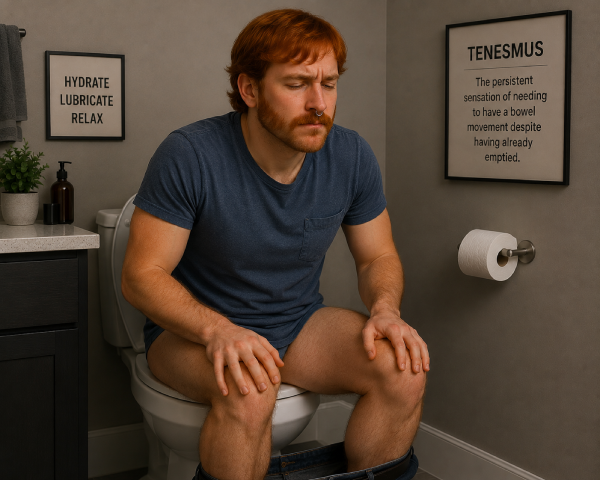
  • Tenesmus | Strong and constant feeling of a pending bowel movement, even when the bowels are already empty, often described as a pulsating hole and "an unresolvable need to shit."
  • Paralytic Illeus | Constipation like cramps caused by the temporary paralysis of the colon when manhandled that can last several days followed by a massive bowel movement after the colon wakes up.
  • Lost or Stuck Items | Fully inserted toys and other items that travel beyond the second hole up the sigmoid colon. These items are out of reach even for small hands and cannot be recovered without surgical assistance.

Each of these items are easily avoidable by following standard practices and protocols.

Never assume your partner knows what he is doing. Always maintain regular communication and repeitive feedback during a depth play session.

Tops may assume a bottom has more skill, experience, or understanding of his colon than he actually does. Tops may also assume a bottom knows when he has or is about to perforate.

Bottoms may assume a top has a great deal of depth experience. Often, depth experience is limited to one or two bottoms who may have holes that differ substantially from your own.

Protocols

Protocols include standard practices and etiquette followed by the majority of the fisting community. Typically, these are things that new fisters pick up over time. While there are dozens of protocols for fisting, those most important for novice fisters to learn include:

Etiquette

Etiquette refers to how you treat others in a specific fisting scenario.

Standard Practices

Standard Practices refers to common sense behaviors related to fisting activities.

Course Appendix

The following material may guide the development and deployment of this topic:

Objectives

Upon completing this course, the student will be able to:

  • Demonstrate... ...techniques
  • Give three reasons for...
  • Identify five...
  • List two alternatives...
  • Recite one etiquette protocol and one standard practice related to...

Note: Objectives should follow instructional design standards and be easily measurable with little ambiguity.

Supplemental Content
Blog Articles
  • Blog Article #1
  • Blog Article #2
F2 Promotional Materials
  • Skills:
  • Protocols:
  • FWOTD:
    • Word #1
    • Word #2
    • Word #3
    • Word #4
    • Word #5
    • Word #6
    • Word #7
Outline (Proposed)
  • Principles
  • General Practices
  • Depth Fisting
  • Control and Consent
  • Body Modification
  • Depth Glossary
  • Proctology
  • Traits and Characteristics
  • Expandability
  • Straightness
  • Responsiveness
  • Tissue Strength
  • Sensory Capacity
  • Referential Framework
  • Preparation
  • Physical Considerations
  • Cleanouts
  • Numbing Additives
  • Physcosocial Considerations
  • Headspace
  • Meditation
  • Partner Selection
  • Environmental Considerations
  • Penetration
  • Progression
  • Lubrication
  • Lube Selection
  • Lube Administration
  • Positions and Techniques
  • Positions
  • Techniuqes
  • Mastery of Core Techniques
  • Misconceptions
  • Risks and Dangers
  • Risks
  • Dangers
  • Protocols
  • Etiquette
  • Standard Practices
F2 Resources

These individuals have indicated they continue fisting with this condition:

  • N/A
Brain Dump - Staging Area
        
Publication Quick Links
Developer's Toolkit | Nu HTML Checker